K-12 TECHNOLOGY CURRICULUM
Tech-Native Fluency
Through structured, inquiry-based pathways, students analyze technology and build compelling digital portfolios that showcase their knowledge.
Individualized and adaptable for all skill levels.
Robust Curriculum For All Interest Levels
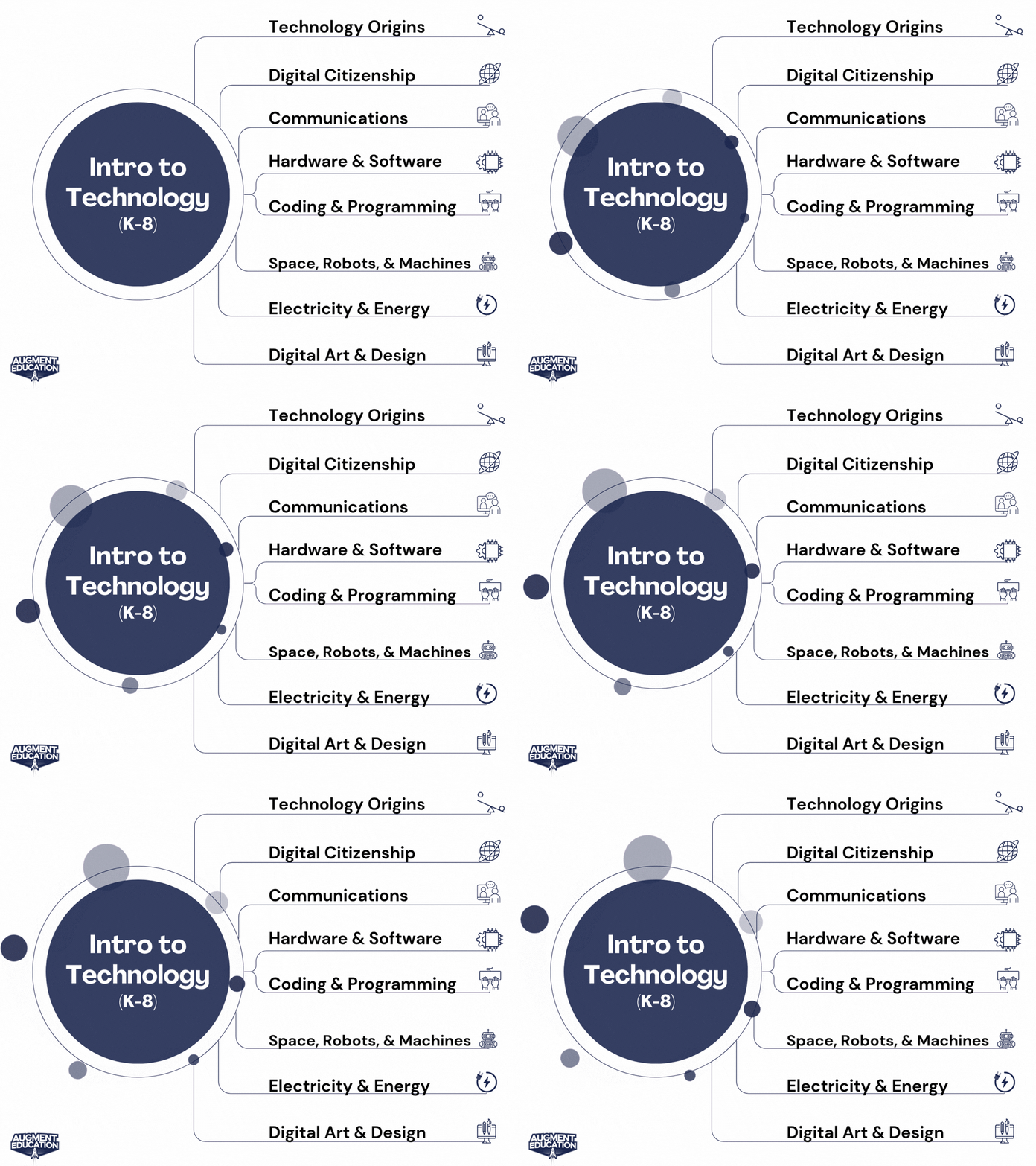
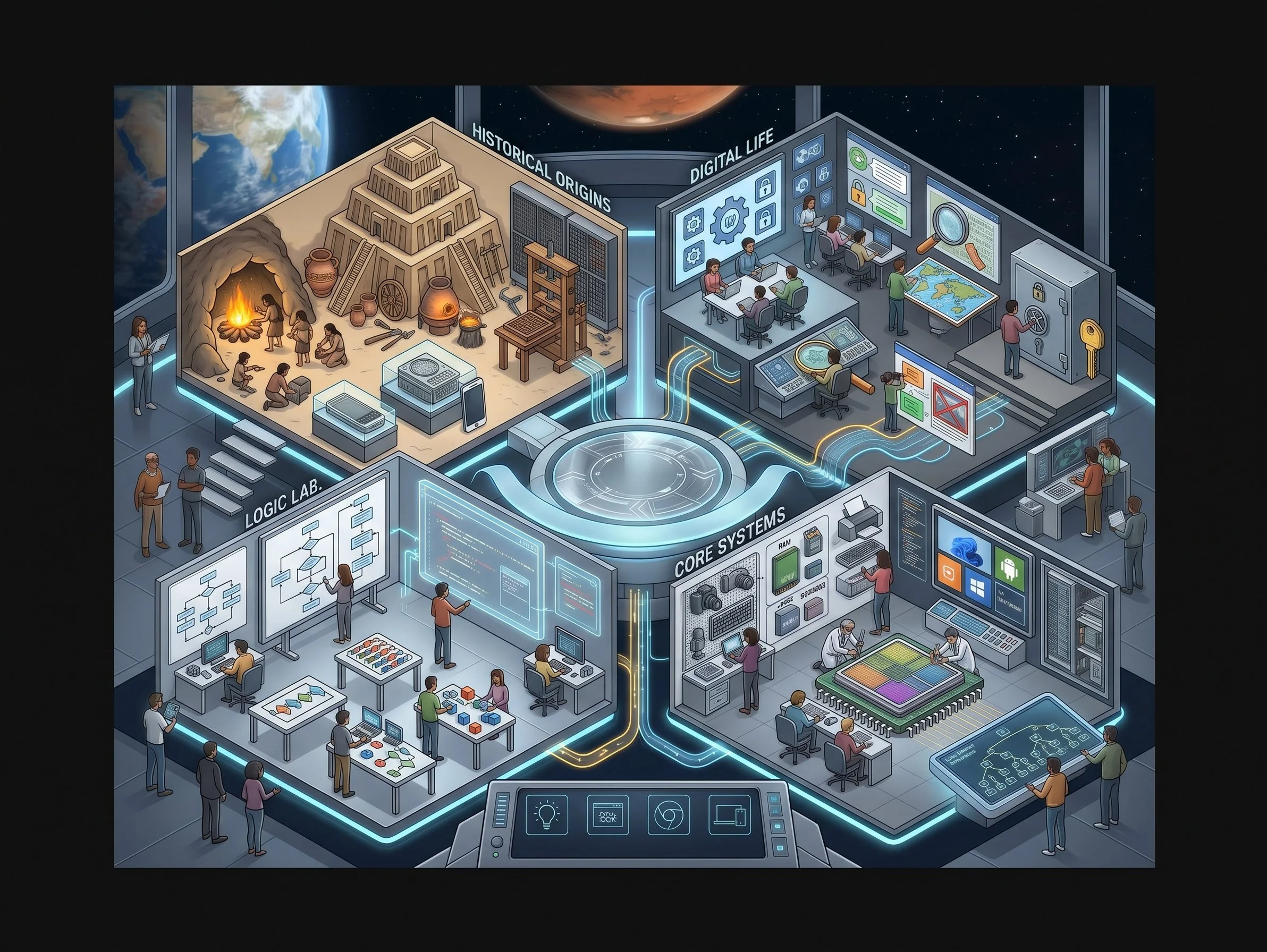
Great for K-8 baseline digital fluency.
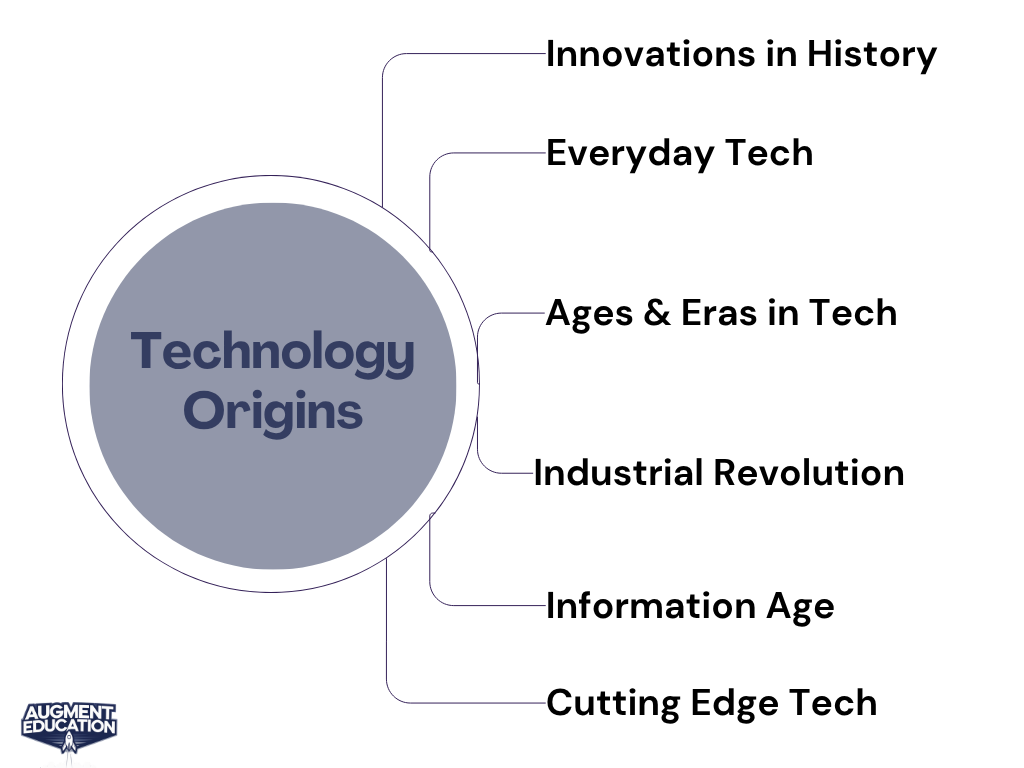
Technology Origins: Key innovations and inventions throughout history - from fire to wheel to bronze age up through modern times, highlighting foundational paradigm shifts.
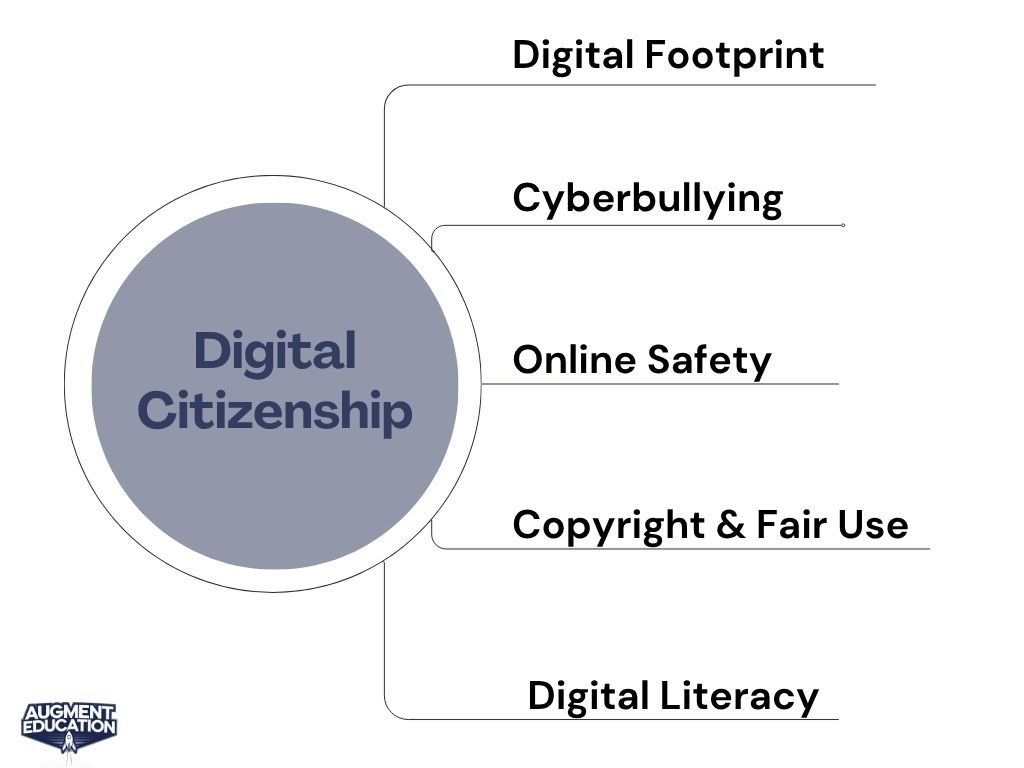
Digital Citizenship: Privacy settings, digital footprint audit, password hygiene, safe communication, and recognizing misinformation/phishing.
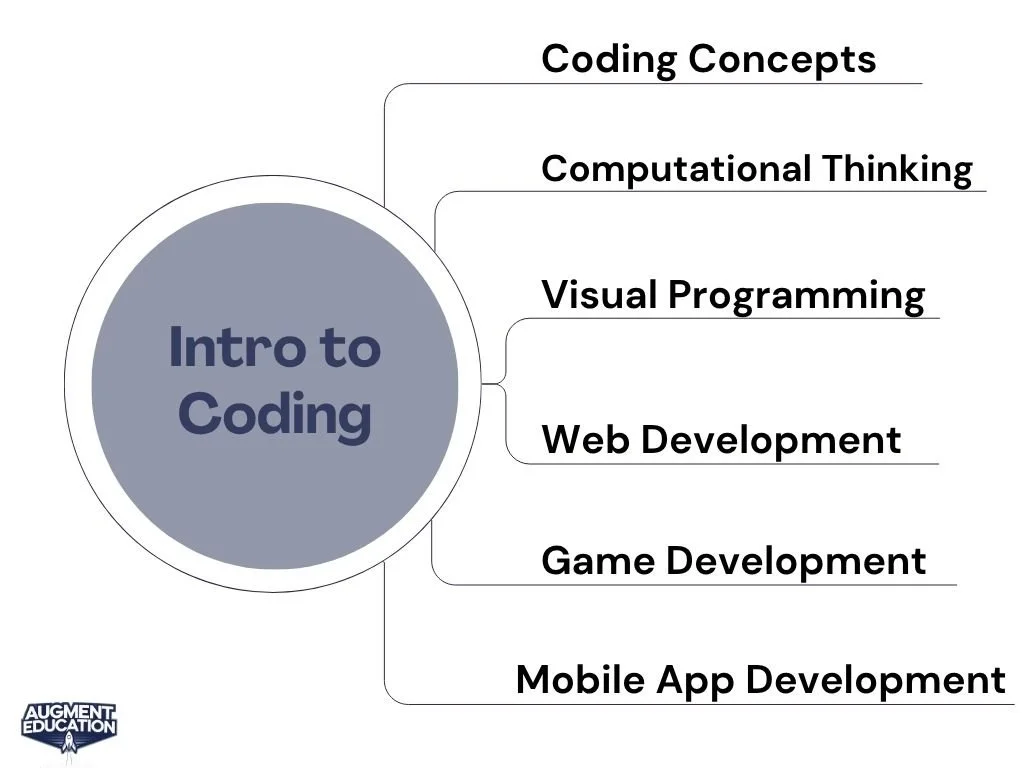
Coding & Programming: Computational thinking, core algorithm design, loops, conditional logic, flowcharting, pseudocode, and debugging principles.
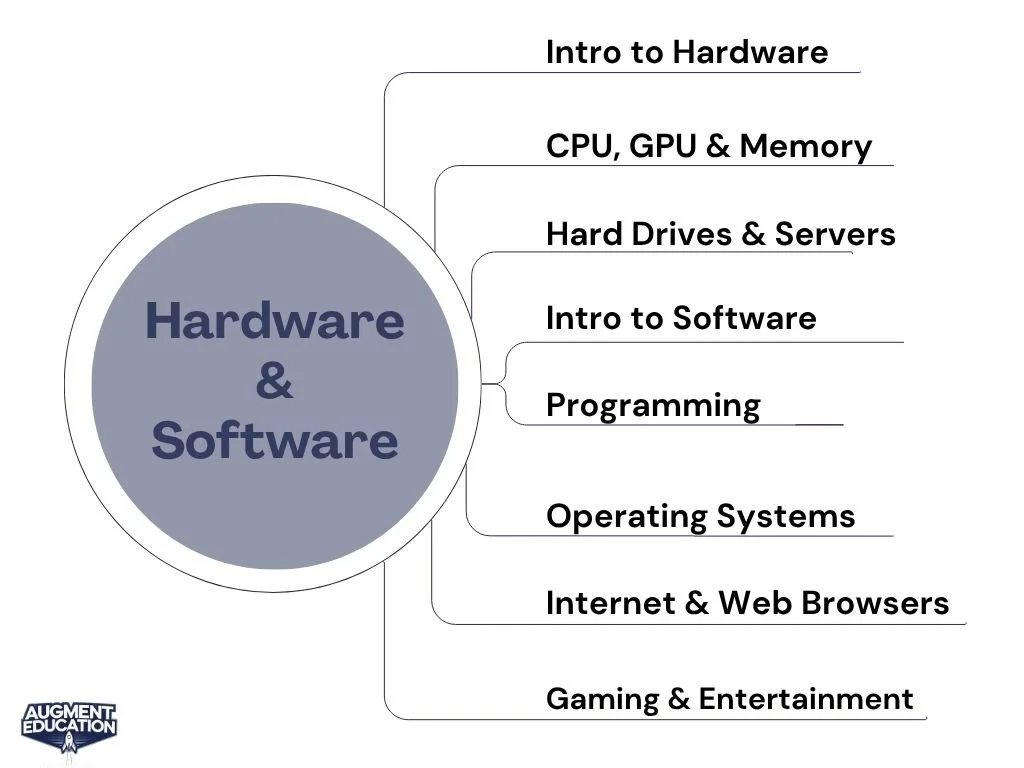
Hardware & Software: Microprocessors, RAM vs. storage, input/output peripherals, operating systems, and file system mechanics.
Featured Pathways
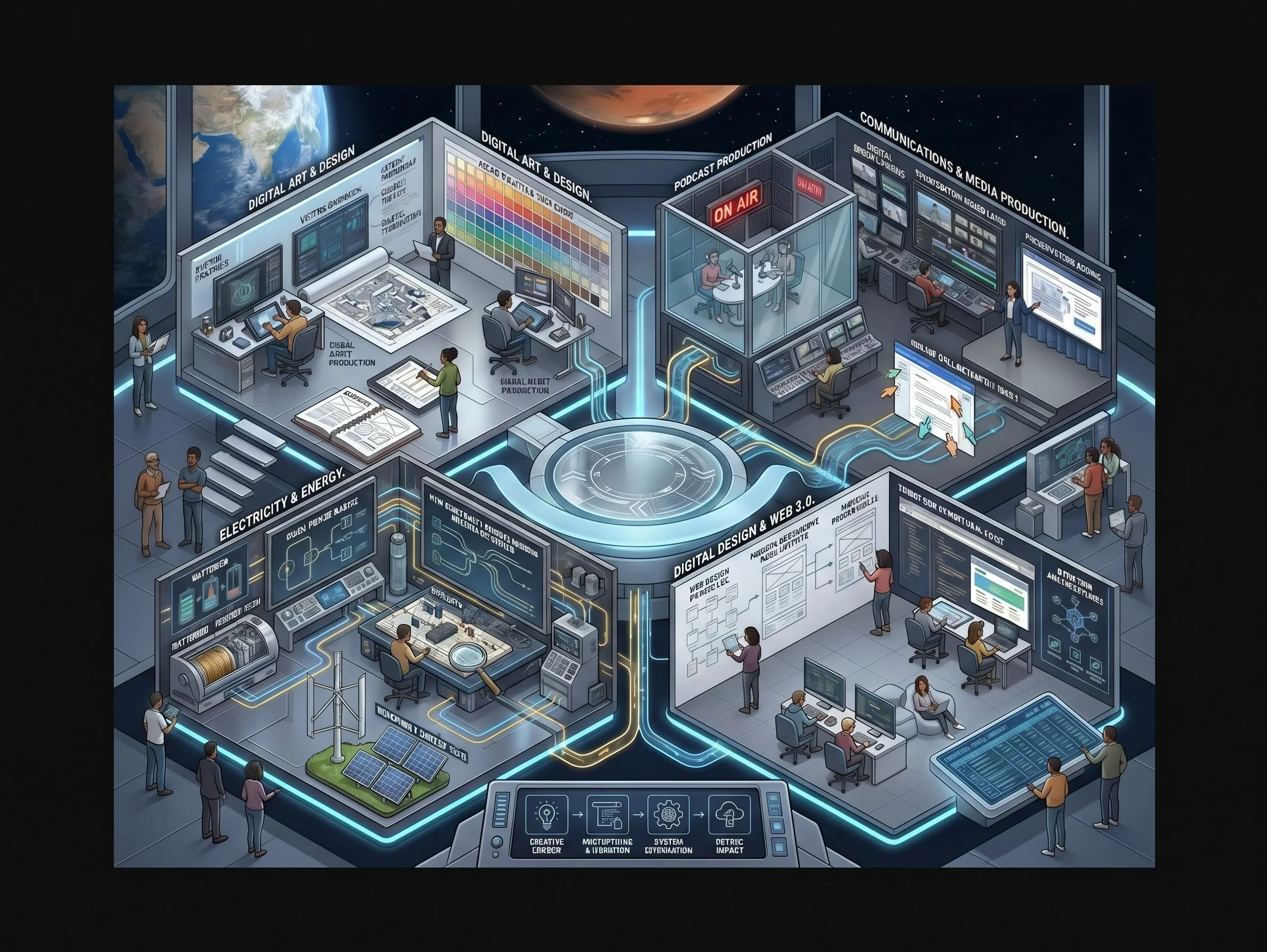
Appeals directly to student creativity and cross-curricular ELA/arts projects.
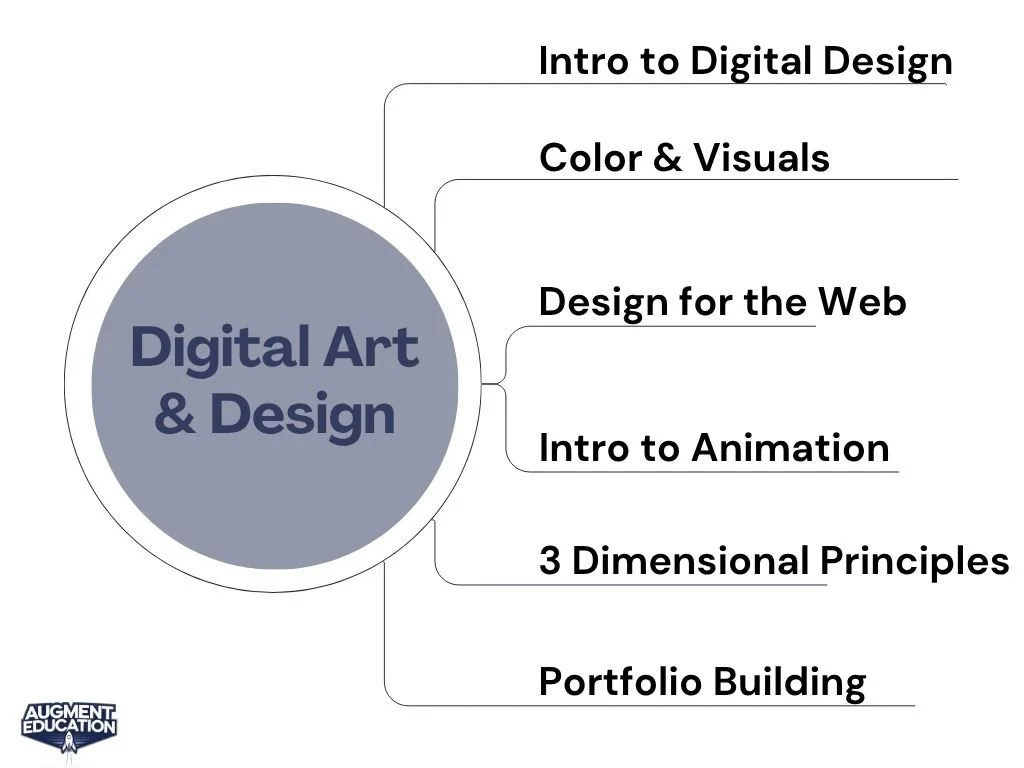
Digital Art & Design: Vector graphics, layout hierarchy, color theory, digital typography, visual asset production, and user interface (UI) basics.
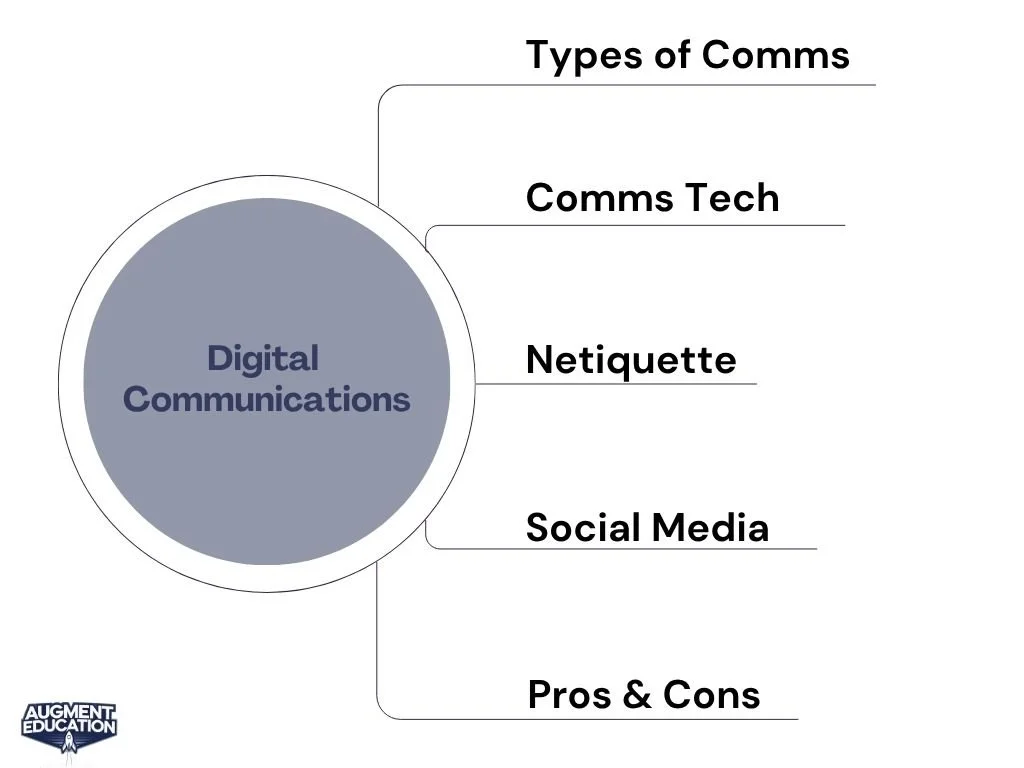
Communications & Media Production: Digital broadcasting, podcast production, video editing workflows, presentation design, and online collaboration tools.
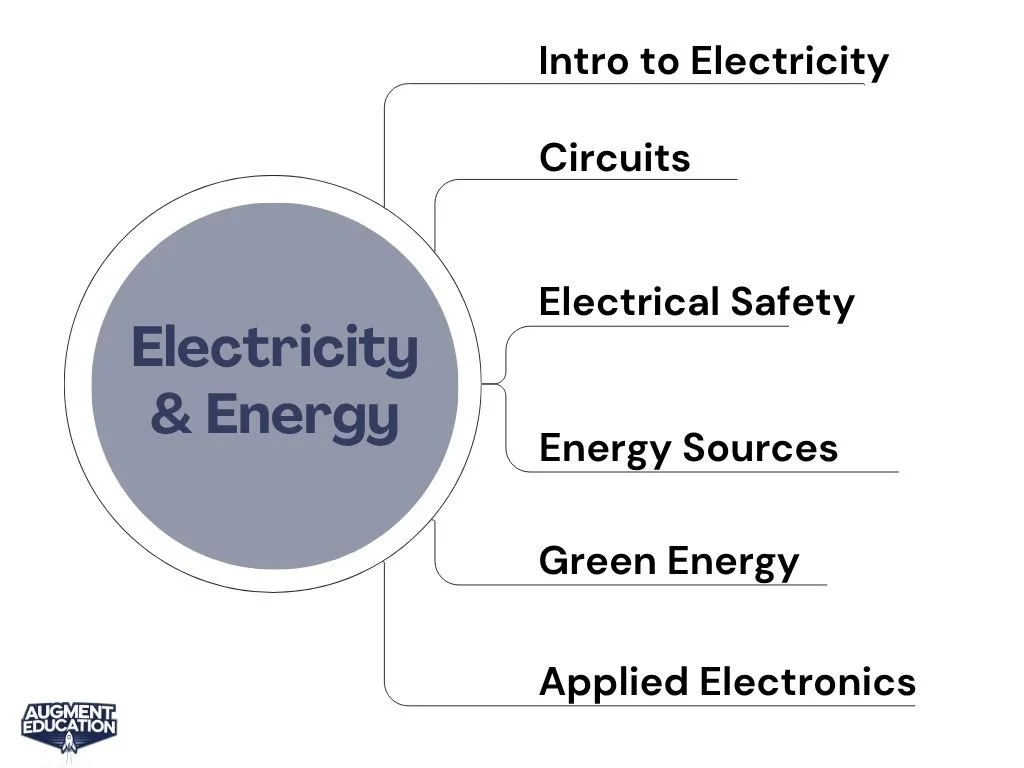
Electricity & Energy: Circuits, AC/DC power basics, batteries, renewable energy tech, and how electricity powers modern microelectronics.
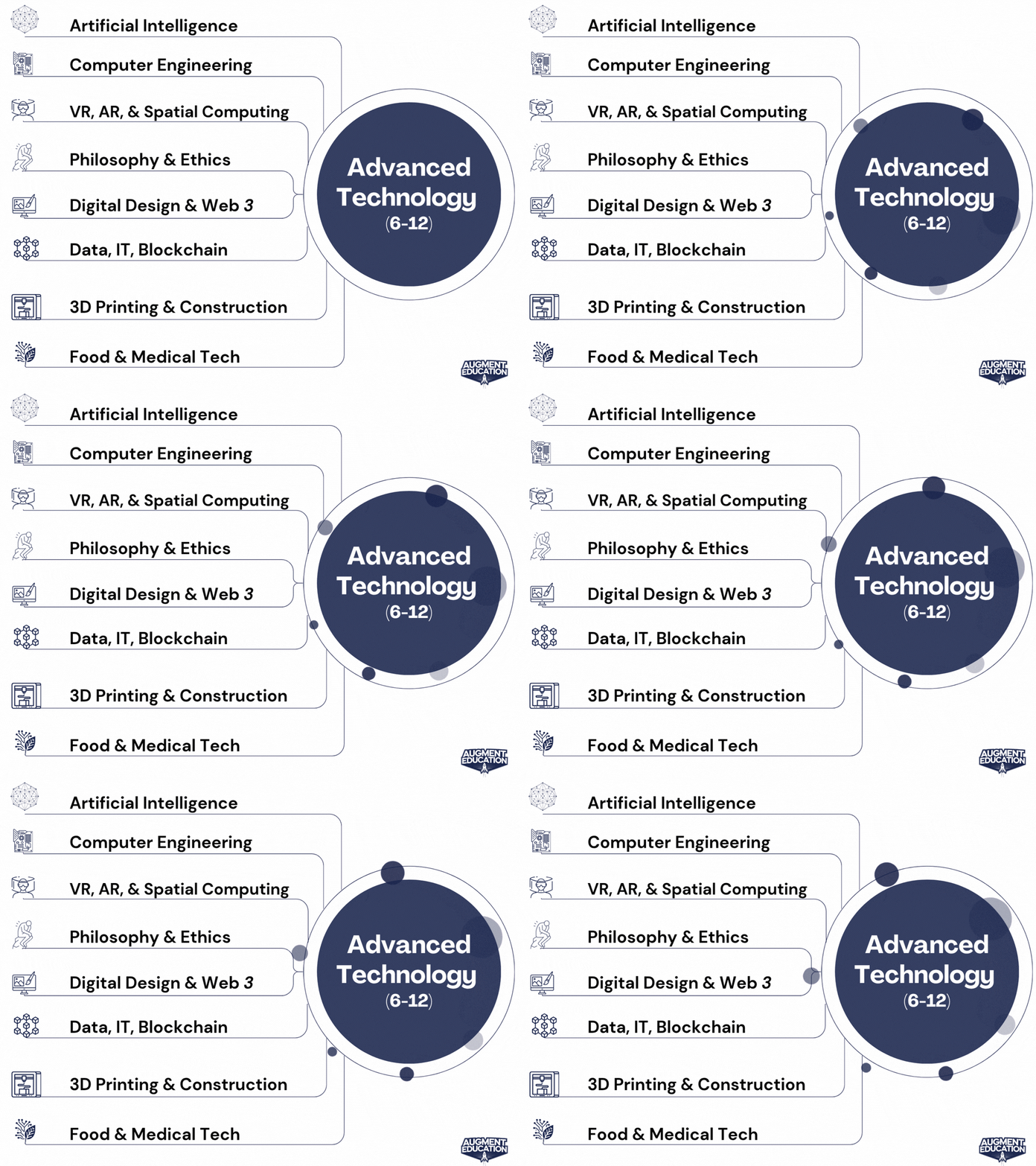
Digital Design & Web 3.0: Web design principles, modern responsive page layouts, front-end structural logic, and open web architectures.
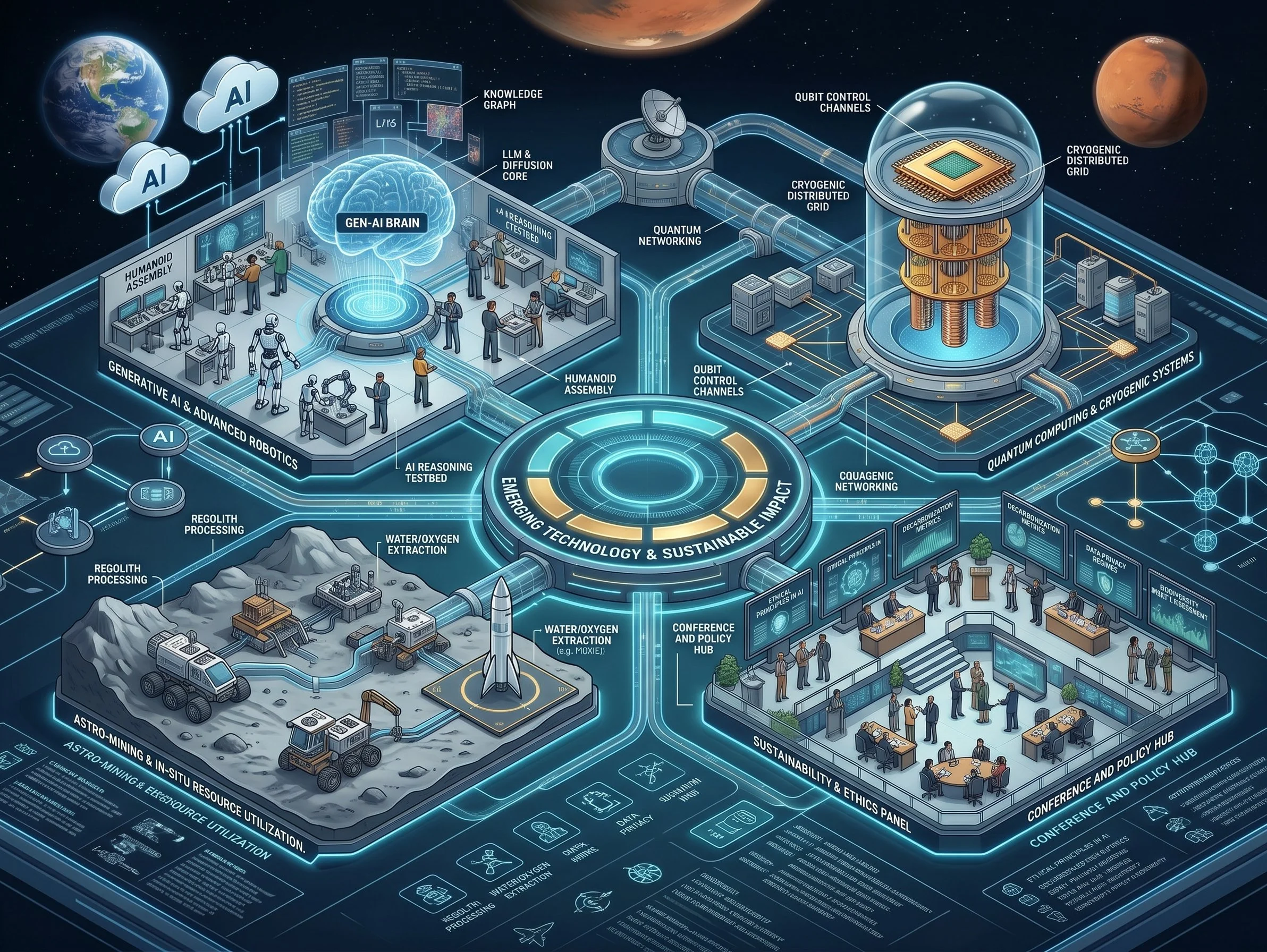
Great for STEM electives, summer bootcamps, and middle school exploratory rotations.
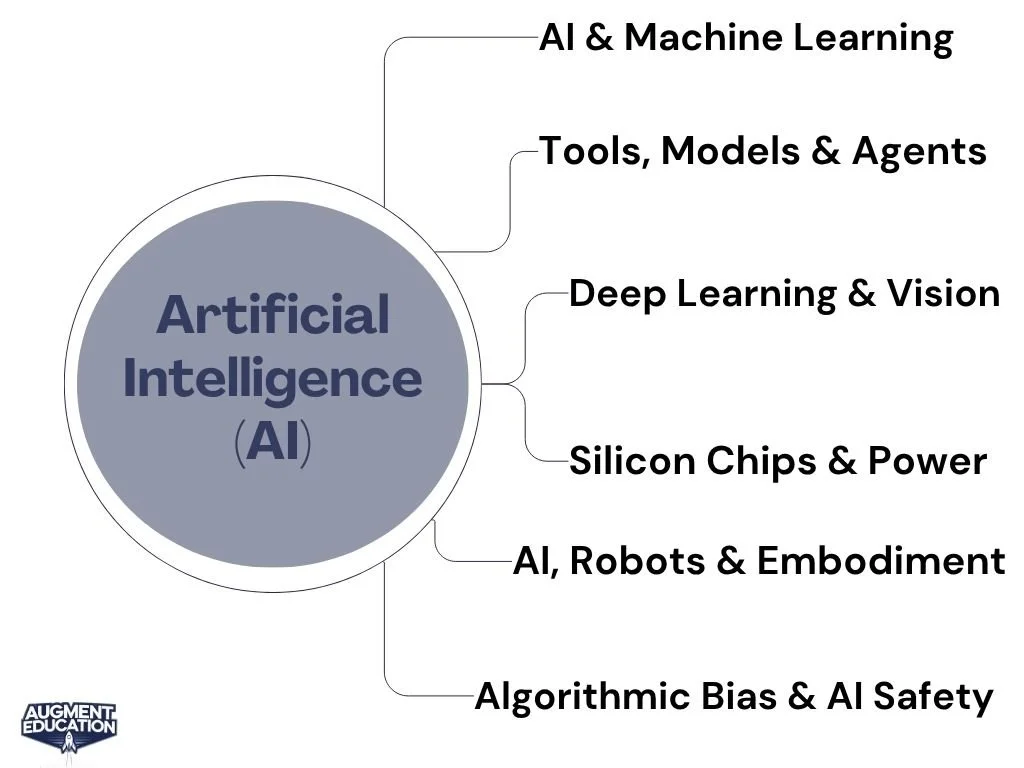
Artificial Intelligence (Digit-AI Literacy Pilot Focus): Machine learning mechanics, neural network models, generative AI tools & agents, silicon chips/compute power, and prompt engineering.
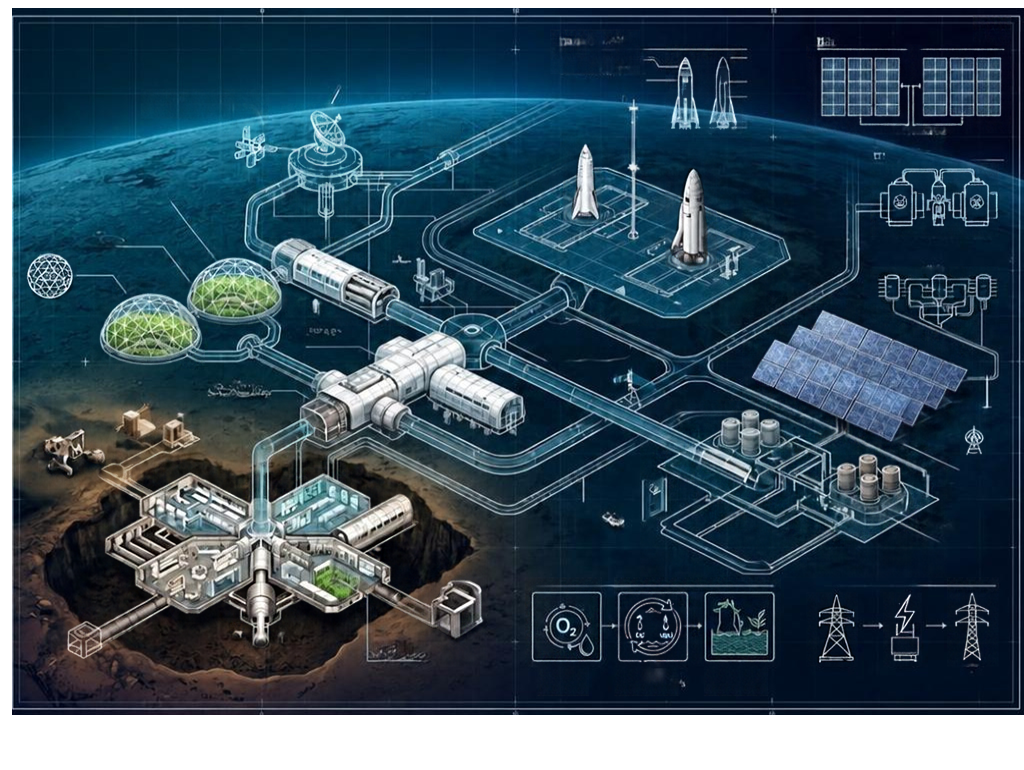
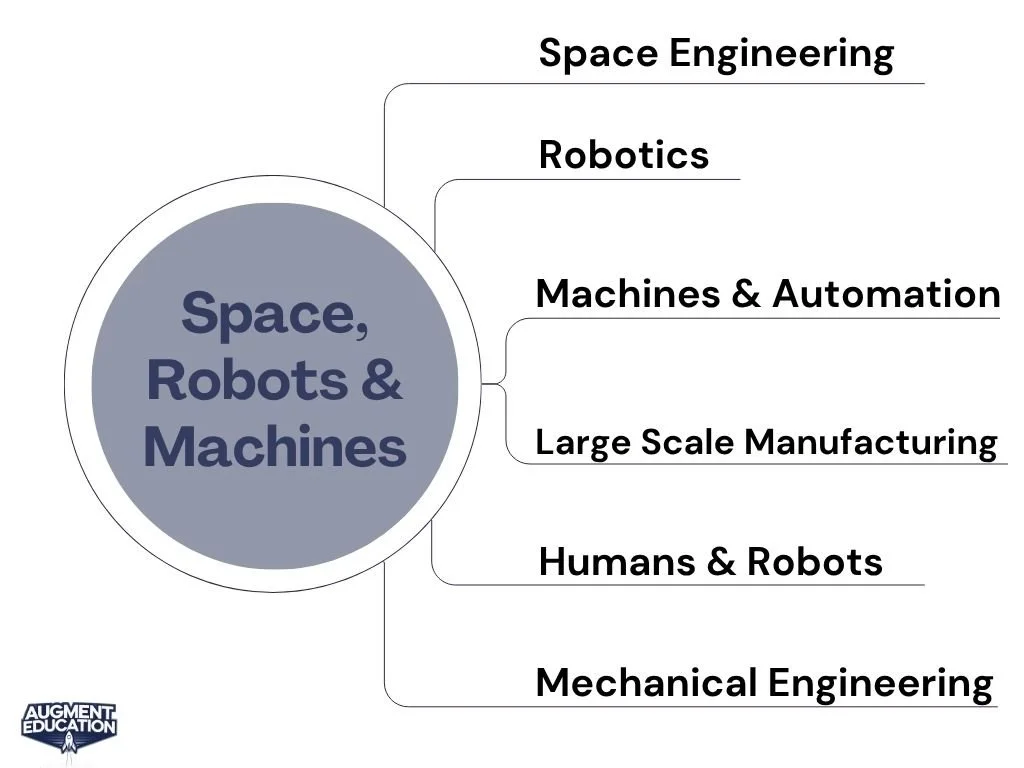
Space, Robots & Machines: Kinematics, sensors, motor actuation, robotic control loops, telemetry, and automated space exploration systems.
VR & Spatial Computing: 3D coordinate geometry, immersion mechanics, spatial interaction design, and virtual/augmented reality environments.
3D Printing & Construction: Additive manufacturing, CAD modeling fundamentals, rapid prototyping, and automated physical construction techniques.
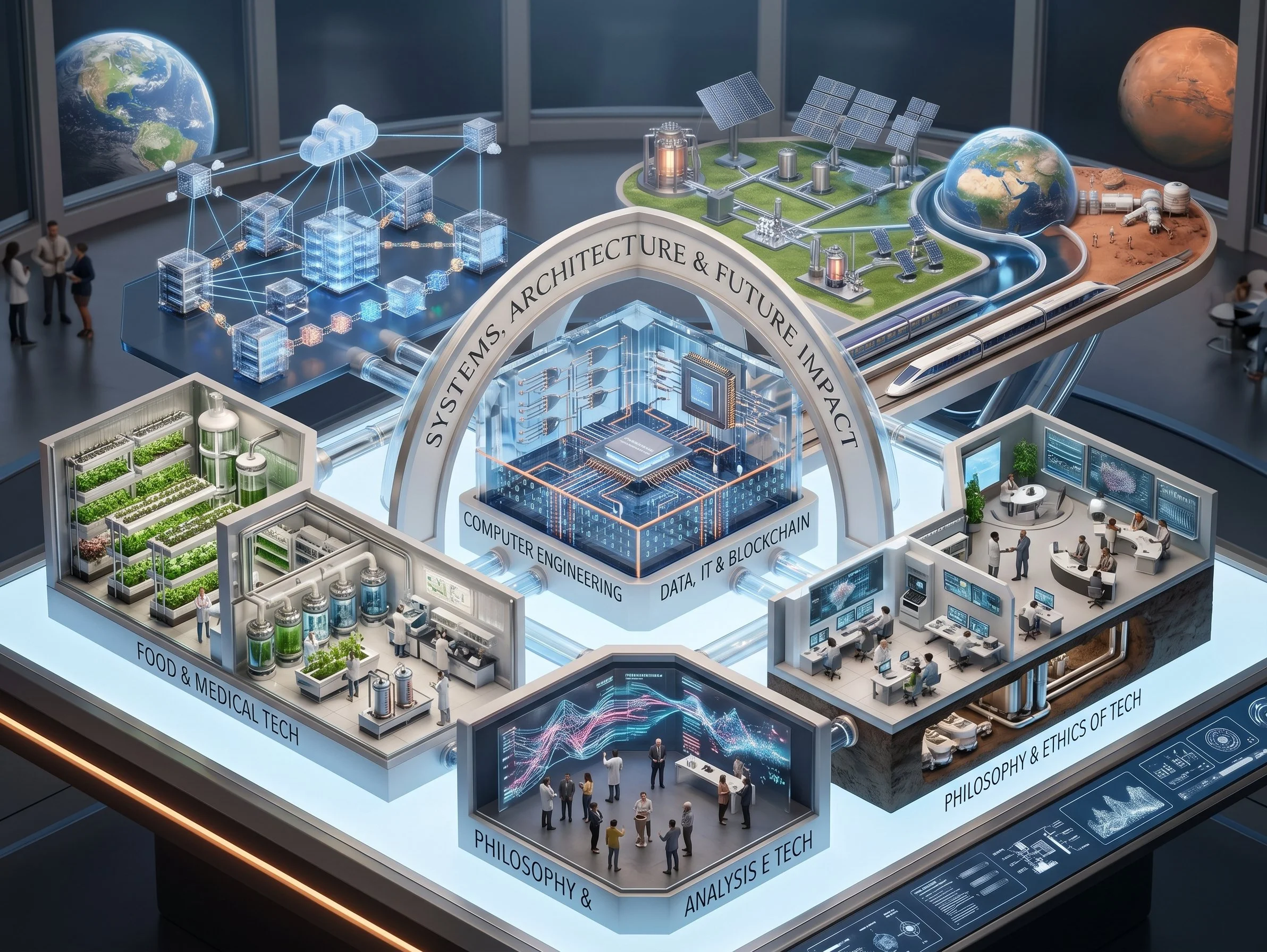
Great for grades 8–12 capstones, high school electives, and career/technical pathways.
Computer Engineering: Logic gates, binary architecture, bus systems, semiconductor design, and low-level hardware-software interfaces.
Data, IT & Blockchain: Database structures, packet routing, cloud architecture, decentralized ledgers, and institutional data integrity.
Food & Medical Tech: Agricultural automation, biotechnology, biomedical sensors, digital health records, and laboratory automation.
Philosophy & Ethics of Tech: Algorithmic bias, automation economics, digital surveillance, copyright in the age of generative models, and AI governance.
Why it works
Compatible with Existing Tech
Works immediately. No downloads. No AI. No need for district firewall reviews. No complex student account setup.
Build Portfilios that Matter
Every session yields a tangible digital asset cataloged into a student-owned portfolio piece, frome a document to a website to a video to a presentation. Highschool seniors graduate with a showcase of their work for college or professional endeavors.
Easy to Facilitate
Structured “I Do, We Do, You Do” Protocols and First Principles cheat sheets empower any teacher, substitute, para, aide, counselor, or parent to lead sessions. Everything is included.
Inquiry-Based First Principles
Students deconstruct core technology concepts by asking questions and learning how to answer them while becoming a subject matter expert.
Individualized Learning
Shared anchors, divergent paths. A single introductory anchor leads into 10+ further inquiries per session, accommodating varied grades and ability levels.
Cross-Curricular
Projects connect STEM, Language Arts, humanities, and ethics, allowing learners to link earlier work into complex capstones.
Interesting & Engaging
Technology is a subject that draws people in naturally, students and teachers can both engage in meaningful discussions about the latest tech.
-
Inquiry-based
stoke curiosity & critical thinking
Students answer their own questions through demonstrable assignments that challenge them to discuss, research, and debate technology topics. New discoveries, using First Principles learning, fuel additional exploration towards mastery and becoming a subject matter expert.
-
Individualized
encourage ownership & fulfillment
Personalized projects, that follow First Principles thinking, with multiple pathways for diverse learners. Highlight individual contributions within the context of a classroom, a community, and the world. Students navigate and progress at their own pace, with teacher guidance, while mapping their own progress throughout the curriculum.
-
Portfolio-Building
Pathway towards a growing body of work
Make learning visible. A portfolio illustrates learning outcomes and builds year after year to establish the foundations for real-world work that demonstrates continued growth and subject matter expertise. Digital documentation. Showing vs. telling. Students own their work using their school or personal Google, Canva, M365, or other document creation platform.
-

Pathway
Aligned with national standards
Content and curriculum is mapped in a pathway that students can explore independently or with teacher facilitation. Surpass state and national requirements with ISTE, CSTA and state frameworks. Courses can also map to core curriculum with cross-curricular added value in Language Arts (ELA), STEM, Digital Production, and custom designed courses that integrate technology.
Students:
build experience with technology
map an individualized pathway and build a portfolio of demonstrable growth
gain expertise and confidence along the way
develop First Principles thinking skills and inquiry-based learning habits
Teachers:
facilitate discussion about technology
challenge students to dig deeper, help to organize ideas and concepts for further understanding
nurture curiosity & make learning visible
no prior technology experience required
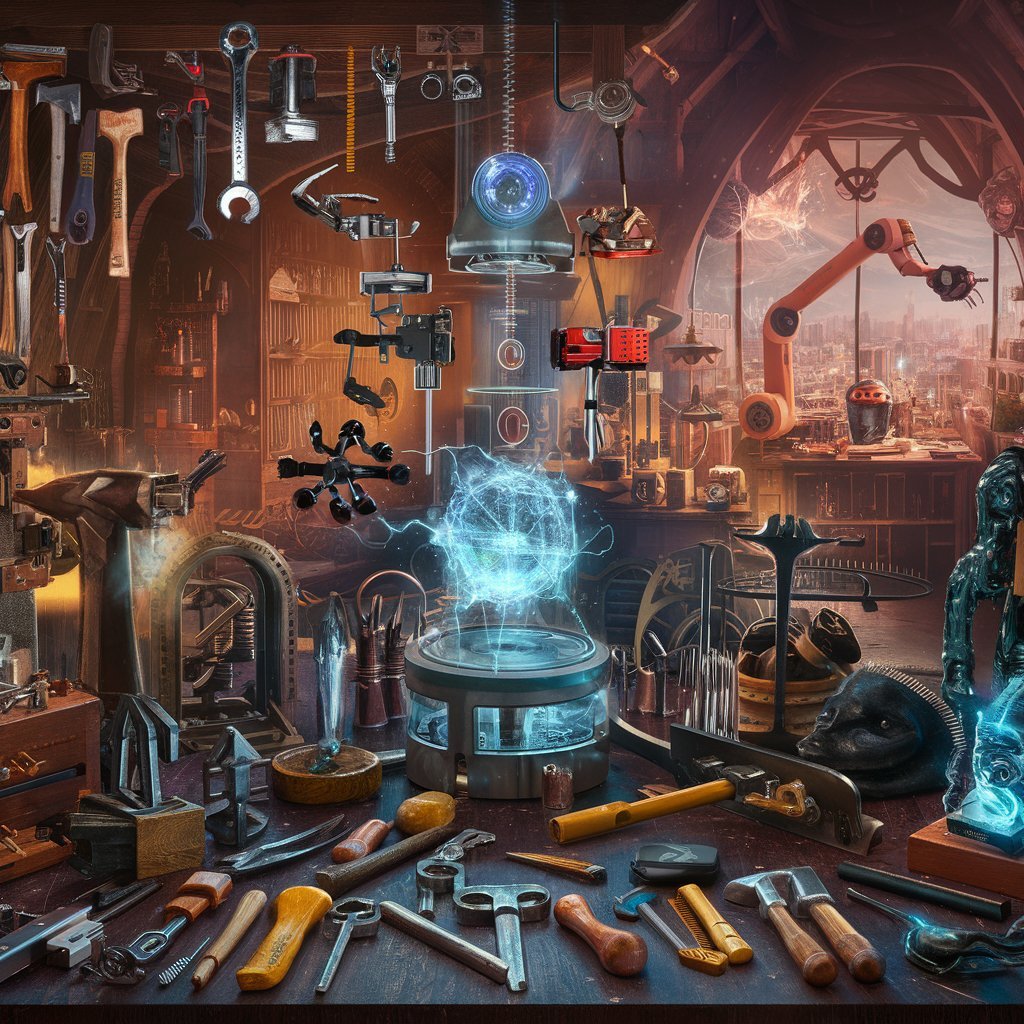
What is Technology?
Starting with the beginning, broad discussions lead students down individualized learning paths that grow with them from K-12.
… a collection of Tools…
A Flexible Curriculum
“Give me a lever long enough and a fulcrum on which to place it and I will move the world.”
— Archimedes, 250 BCE (over 2,000 years ago in his book Equilibrium of Planes)
With new technology, the lever gets longer… as the world moves, how can these tools be used to help build the future? Students want to know.